Over a month has now passed since we last wrote and since we
left Carnarvon heading north to the Ningaloo Coast.
 |
| Gorgeous gin clear water of Ningaloo |
We had a great overnight sail to Maud’s Landing [Coral Bay] with a brisk 20kt wind behind us all the way finally dropping the anchor at breakfast time in the calm clear waters behind the Ningaloo Reef. It felt great to have finally ventured into new territory and found such gin like water teeming with exotic life.
Ningaloo Reef is one of the largest and most pristine fringing reefs in the world. It is abundant with beautiful corals, fish, whales, whale sharks, turtles and a myriad of other marine creatures. Despite its World Heritage listing and marine park status it is threatened with oil and gas exploration.
 |
Passing through the reef
|
The area around Coral Bay is very popular and this year is the busiest people can remember due to travel being restricted to within WA. There is a clearly marked channel which goes south past the township inside the reef and this was a great opportunity for us to have a good look at the rocks and ‘bommies’ passing close by but safely within the marked channel. This is a rare thing along the inside of the reef, in fact much of it has not been charted at all. We spent a night near Moncks Head but found we were on the main track for all the small boats heading out for fishing - tearing past us at dawn, many of them very close.
 |
| Threading through the Coral Bay channel |
Returning to the quieter anchorage at Maud’s Landing, we had
the great delight of catching up for sunset drinks on the beach with Dianne and
Peter, our friends and neighbours from Albany.
 |
Albany friends Dianne, Peter and Harry the dog - cheers!
|
After a few days, we felt ready to head further north into
the less documented areas inside the reef. Our first stop was a little bay
called Chabjuwardoo where we spent a night. Then on to the site of the old whaling
station at Norwegian Bay via a tiny channel around Point Cloates. This is a
narrow, shallow passage which can only be used at high tide, very exciting! We
landed our first school mackerel on the way and saw lots of turtles and whales.
 |
Point Cloates lighthouse
|
 |
Doggie mackerel - first trolling catch.
|
 |
Norwegian Bay old whaling station
|
As you can see the remains of the whaling station are still
there slowly rotting away. Lots of steam boilers with intact tube stacks and
the big winch on the beach which despite getting doused by the ocean every day
since it was closed in the 1950s is still recognisable for what it was.
 |
No more whale slaughter here - yay!
|
 |
Whaling station debris everywhere
|
 |
One of the many abandoned boilers
|
 |
More than 70 years on the beach
|
Norwegian Bay is a sanctuary zone so there are no fishers in tinnies or campers, a quiet spot for us. We did lots of beach walking along this wild and beautiful bay, finding giant crayfish shells washed up intact and lots of pretty shells. We stayed for three days but finally the rolly nature of the bay in the southerly wind convinced us to move on.
 |
| Miles of pristine beach to ourselves |
 |
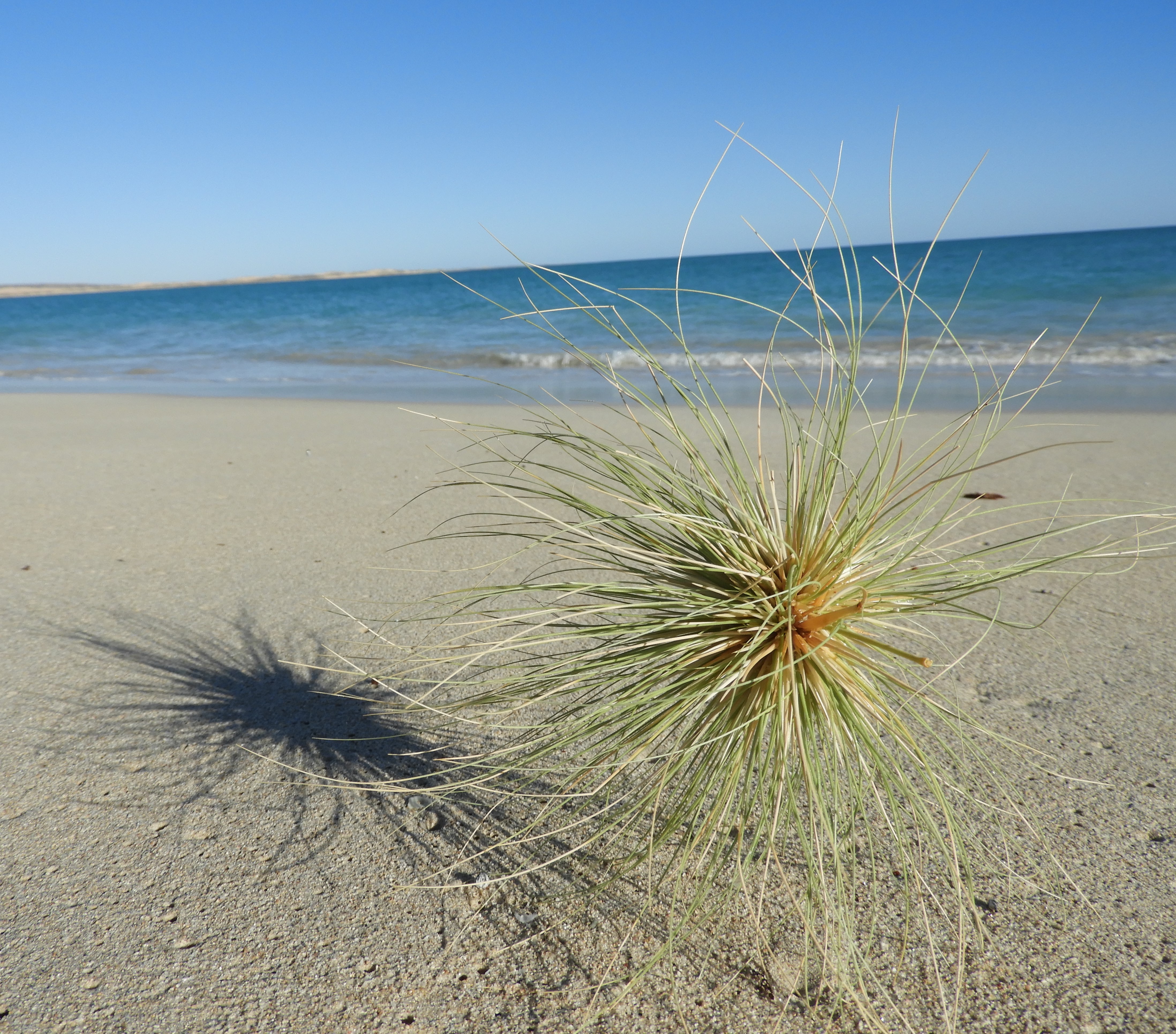
What is this strange creature - any ideas?
|
 |
Pretty tumbleweed
|
We went outside the reef to get to Tantabiddy near North West Cape and saw dozens and dozens of very lively humpback whales, many of them breaching repeatedly and slapping fins and tails. Some of them came very close to the boat to check us out. It was a thrilling show on the humpback highway and so good to see the whales in such healthy numbers.
 |
"Bommie" look-out as we head through the reef
|
 |
Hello humpback!
|
Tantabiddy is very sheltered from the swell by the reef and the base for about 20 charter boats that take people out every day to see and swim with the whales and the whale sharks. Other than the boats it is just a boat ramp and toilet in the middle of nowhere, being about 50km from Exmouth. We were lucky to get a government mooring right next to a little sanctuary zone with lots of gorgeous coral within swimming distance.
We snorkelled every day in the warm 24 degree water and loved seeing the colourful fish and coral.
 |
Snorkelling to check the anchor and extraordinary marine life around us
|
 |
| Relaxing with morning coffee and phone signal |
After three days we headed back out and north for Serrurier Island, an early morning start for a 50 mile trip. Again so many whales along the way! We became quite worried about hitting them and Jenni took to practicing her tap dancing in the cockpit to make sure they heard us and were awake. A large yellow sea snake startled us swimming next to the boat near Murion Island and along with the whales, lots of jelly fish and a few turtles kept our eyes glued to the water.
Having finished eating the mackerel Chris tried his luck with trolling again but only managed to lose two lures to some enormous fish we were glad we didn’t catch!
 |
| Ningaloo blue - we'll be back! |
 |
Rounding Northwest Cape - the coast turns east from here
|
 |
| Spies! Massive radio towers at Northwest Cape US/Australian Naval Communication Station. |
Late afternoon we anchored in a pretty little bay on the south east side of Serrurier Island with plans to explore ashore the following day. Instead we woke with the boat rolling violently in the early hours of the morning as a fresh southerly had sprung up. Sleeping in such a state was impossible so we made a leisurely start to the day with early coffee and breakfast and prepared to go to sea unexpectedly, finally leaving at 4:30am for a surprise stop at Onslow about 4 hours sail away.
We sailed past the massive gas works on the way in, not sure what we would find but the town is situated in a bay facing away from all the industrial stuff and we didn’t notice it was there except for arriving and leaving.
 |
Still chilly early in the morning
|
 |
| Welcome to the Pilbara! Wheatstone gas processing facility & port near Onslow. |
 |
Onslow town foreshore - now we start getting used to the tides and red mud.
|
We found Onslow to be a lovely little town with a calm anchorage in the southerly wind just off the town beach. We stayed for a couple of days getting some fresh vegies and preparing to go out the Montebello Islands.
After a few weeks out of range in the wild and remote Montebellos, we are now in Dampier.
Next up date soon!
 |
Optimistic baby! A nursery of baby cormorants hoping that this seagull is mum with lunch.
|
 |
| These handsome little swallows love hanging out with us. |
 |
Flying our home-made Aboriginal flag as a courtesy and respect to the traditional owners of Australia
|